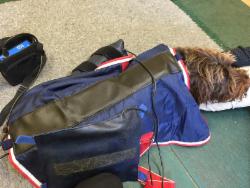
Canine Physiotherapy at Meadow Farm
At Meadow Farm we offer specialist physiotherapy assessment and treatment in those cases where physiotherapy is appropriate and will benefit your dog. Assessment is subject to consent from your veterinary surgeon. An experienced and qualified veterinary physiotherapist is available to provide expert individual assessment and treatment to ensure the best rehabilitation for your dog. Management strategies and advice regarding prevention of further injury or management of your dog’s long-term physical health is also available.
What is canine physiotherapy?
Physiotherapy treatment is a mainstay in human medicine and has evolved rapidly in veterinary medicine in the last few years. Physiotherapy treatment for animals is a proven therapy that can help recovery in your pet for a variety of conditions and complaints.
The most commonly treated conditions in dogs tend to be orthopaedic conditions, for example:
- Tendon & muscle injuries
- Injuries to ligaments (e.g. Cranial cruciate disease/rupture),
- Osteochondrosis dissecans (OCD)
- Fractures
- Post-surgical rehabilitation
It can also help with neurological problems such as
Spinal problems/disc disease
Fibro-cartilaginous embolism
Assessment
An assessment can take up to 60 minutes depending on the condition. All dogs are different and especially in neurological cases the first assessment may be shorter due to fatigue. The assessment will include gait analysis, a full body observation and palpation of soft tissues and assessment of joint mechanics and function. There is usually time at the end to include some treatment. You will always be given a full explanation of the findings of the assessment and often some exercises and advice to get started with, before the next treatment.
Treatment
A variety of manual, hands-on techniques can be used to influence structures in the body, either to alleviate muscle soreness and spasm, facilitate healing or to improve the mobility of joints in the spine or limbs. Rehabilitation exercises may be necessary to restore balance, normal movement and function in dogs with neurological deficits. These can be assisted with certain pieces of apparatus, which the physiotherapist will discuss with you.
In addition, where appropriate, electrotherapeutic modalities may be used to aid the recovery of acute soft tissue damage, such as strained muscles/ tendons or sprained ligaments. These modalities can also be very useful for general pain relief in more chronic and painful conditions such as arthritis. 
Treatment techniques will usually include a combination of
* Soft tissue mobilisation/massage, trigger point release * Myofascial release * Joint mobilisation
* Passive joint motion
* Rehabilitation (Assisted or active exercise)
* Neuromuscular electrical stimulation
* Laser
* Pulsed electromagnetic energy
* Ultrasound
Treatments and exercise regimes are tailor made to meet the specific needs of your pet. The number of treatments necessary is entirely dependant on the diagnosis, the way your pet responds to therapy and other factors such as condition, age, lifestyle etc. This will all be discussed during the assessment. After treatment your pet may feel relief straight away or may feel some temporary stiffness and/or tiredness and may want to drink more. Treatment soreness should only last for approximately 24 hours. For dogs with neurological deficits the goals are to improve function and restore normal movement as much as possible. Each dog differs in the speed and rate of recovery.
The general goals of physiotherapy are always to:
Reduce pain Improve mobility
Restore pre-injury strength and flexibility
Restore full function and performance
Included is advice on
Injury prevention Maintenance for the future
Treatments can take place in the therapy room at Meadow Farm and are carried out by an experienced and qualified professional veterinary physiotherapist, home visits are available by arrangement.
Sarah qualified as a Chartered Physiotherapists from the University of Hertfordshire in 1999 and has worked around the country in various fields in the NHS including neurological rehabilitation, medical, respiratory ca
re, musculoskeletal and orthopaedics.
In 2003 Sarah began working with animals and became a member of the Association of Physiotherapists in Animal Therapy (ACPAT). She commenced a 2-year MSc in Veterinary Physiotherapy at the Royal Veterinary College - which she obtained in 2005. Sarah now works full time treating small animals, predominantly canines, although she does keep up a small number of hours in human private practice.
www.acpat.org This site lists all category A members of the Association of Chartered Physiotherapists in Animal Therapy (ACPAT) and has some useful links and pictures of animals undergoing therapy
For more information please visit Sarah's website at www.vetphysio.com
Meadow farm 2009
Meadow Farm 2008
Copyright © 2008 Meadow Farm